

Insights
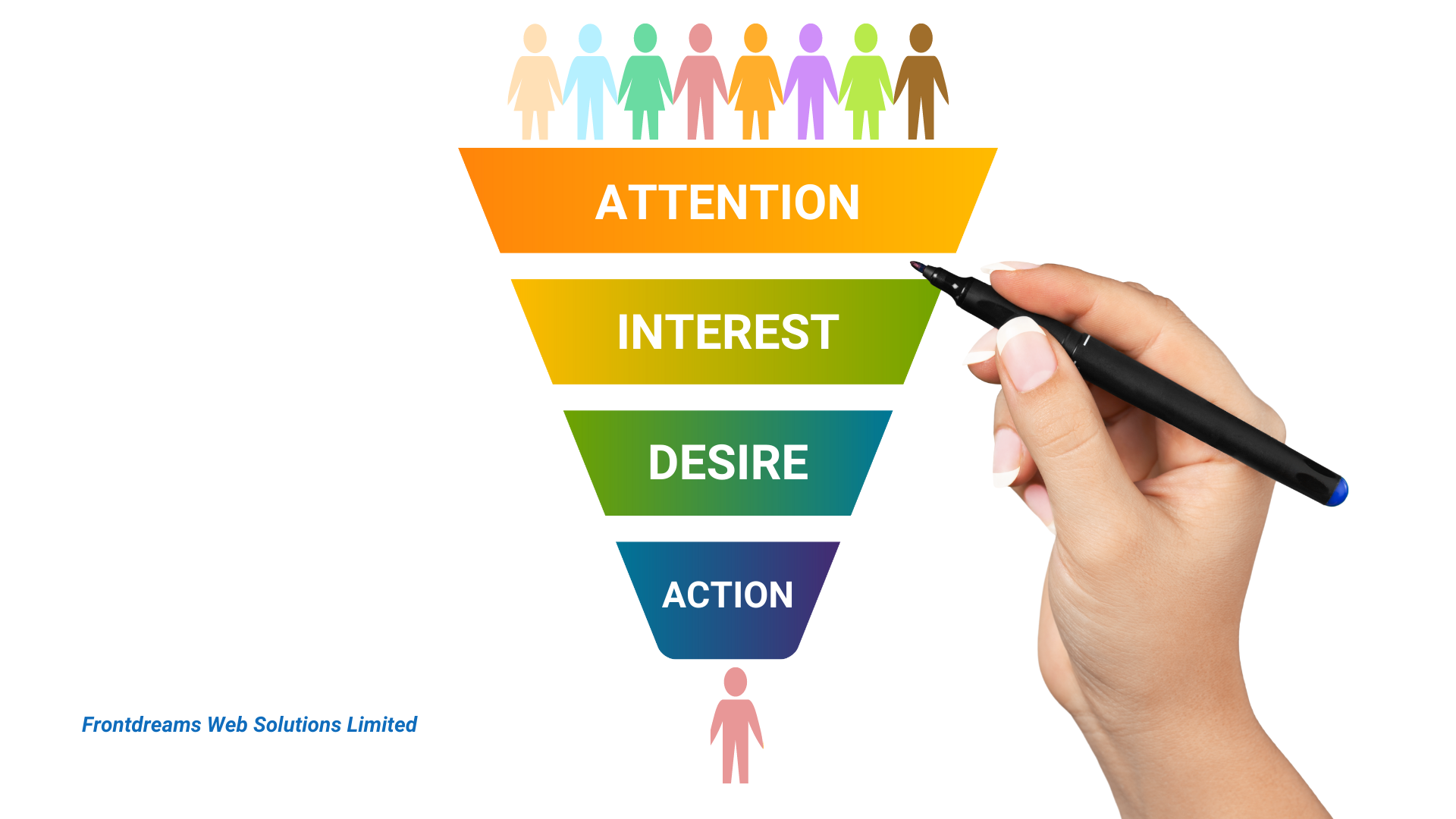
The AIDA (Attention, Interest, Desire, Action) Principle
Ibrahim Isaac
If you've been following marketing news for the past several years, you've probably seen the AIDA acronym mentioned a few times. It can seem as if the subject of marketing inspires a limitless number of acronyms, all of which are meant to help you enhance your business. The abbreviation AIDA has the same meaning regardless of which element of business is being discussed; nonetheless, it is widely used in the context of content marketing and advertising.
What exactly is AIDA? What makes it such a vital part of every marketing campaign? Most importantly, how can you apply the AIDA formula's components to optimize your campaign and increase the return on your marketing investment? Consider the answers to these and other questions in this quick guide to the AIDA formula.
What is AIDA?
The AIDA model outlines the four stages that a customer goes through before completing a purchase. Attention, Interest, Desire, and Action are the stages. Ideally, your content will attract attention to your brand, build interest in your product or service, stimulate a desire for it, and prompt action to try or buy it during these four stages.
A - Attention
I - Interest
D - Desire
A - Action
Because the AIDA model is a hierarchy of effects model, customers must progress through each stage of the model to achieve the intended action. Each step, like a traditional marketing funnel, has fewer customers than the one before it.
For example, if you don't get people's attention first, you have little chance of generating interest in your product or service, and you can't expect them to act and buy something that hasn't piqued their interest.
How You Can Use AIDA
As with any hierarchy, it's critical for you to grasp each stage, just as it is for customers to progress through each level to become customers. You'll be able to successfully encourage customers to reach the critical action stage, which will result in a purchase or other conversion.
- Attract Attention. If you want customers to learn where and how to buy, you must first get their attention. Attention must come first, just as it must in a piece of literature, before the reader - or buyer, in this case – will give the rest of the piece a chance. To grab people's attention, you need to find out what their common problems, concerns, interests, and qualities are, and then tailor your marketing strategy to address those issues.
You can start your marketing efforts in locations where customers often direct their attention, such as social media and television, to draw notice to your campaign. Because it is different from the surrounding content, the appearance of your marketing activities - whether content marketing, traditional ads, media, or something else – catches the user's attention.
You can also draw attention to your material by using an exciting, surprising, or controversial feature. A stunning headline, an intriguing photo, or tailoring of the ad to the consumer's tastes are examples of elements. If you've successfully captured the customer's interest, he or she is far more inclined to seek out additional information.
- Generate Interest. The battle isn't done once you've captivated the attention of customers. Now you must keep the customer's attention long enough to communicate the most important information that will allow them to progress through the funnel. You can accomplish this in a variety of ways depending on your service, product, or industry. To maintain consumer interest while transmitting crucial information, some marketers choose to utilize comedy, provocative imagery, or personalisation — methods used in the initial attention-getting stage. Others concentrate on developing websites that are clear, concise, and simple to navigate. Whatever method you use to maintain interest, it's critical to keep moving your customers along the AIDA hierarchy.
- Stimulate Desire.The AIDA model's second and third stages are linked. While you're attempting to pique clients' interest in a product or service, it's critical that you help them understand why they "need" it.
You must now nurture consumer demand if you have effectively captured consumer attention and maintained interest long enough to communicate information about your product or service. A desire to learn more about what your product has to offer can lead to a desire to understand how it can meet a consumer's demand. Adding to the facts and qualities that the consumer already knows about your product can help to promote desire. Alternatively, you could be making a customer wonder how they got by without your service for so long. You've effectively set the scenario for the customer to make the ultimate decision to take action at this point.
- Take Action. Finally, consumers are nearly ready to act after learning as much as possible about you and your product or service. Your job isn't done yet; you still have to make sure that the consumer's idea to act, the "I would gain from buying this product" concept, comes to fruition. This is where you'll make your call to action. An email reminder, a paragraph at the end of a social media ad, or a targeted reminder of a deal can all serve as a final reminder to contact, visit the website, or reach out in some way.
Good advertising should generate a sense of urgency in consumers, encouraging them to act NOW. Making limited-time offers is a frequent approach for accomplishing this goal (such as free shipping).
The AIDA model is a reliable structure for leading your audience through the buyer's journey and encouraging them to take action. And if you use it in your content marketing, you'll be using a tried-and-true formula for engaging, persuading, and converting an audience into consumers. However, knowing your client journey is the first step.
Views: 11267
Information
Quick Links
Solutions
Support
Subscribe to news updates